
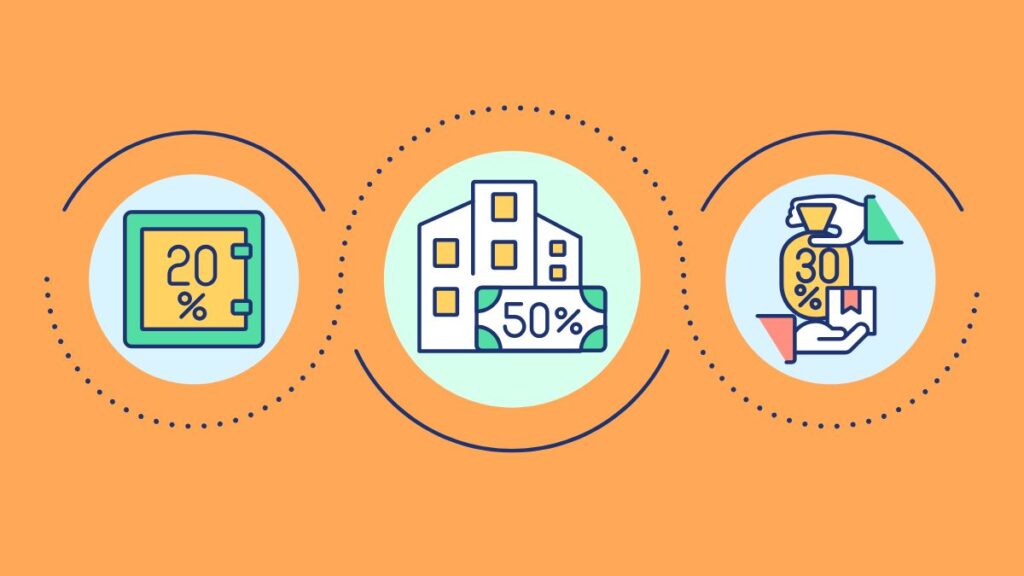
When you don’t know where to start, budgeting can feel overwhelming. You have to track every dollar, use multiple apps, and, in general, try to make sense of your numbers. This is when the 50/30/20 rule enters the chat because it’s a simple, flexible, and beginner-friendly way to manage your money. It doesn’t matter if you’re just starting or trying to regain control of your finances; it’s a good budgeting method for everyone.
Let’s go over what exactly the 50/30/20 rule is and how you can start using it.
What is the 50/30/20 Rule?
The 50/30/20 budgeting strategy was introduced by U.S. Senator Elizabeth Warren’s book “All Your Worth: The Ultimate Lifetime Money Plan” as a super-simple way to create financial balance. It divides your after-tax income into three buckets.
- 50% for Needs
- 30% of Wants
- 20% for Savings & Debt Repayment
How it Works
For example, if you take home $5,000 a month after taxes and utilize the 50/30/20 rule, your budget would look like this:
- $2,500 (50%) – Needs
Essentials like rent/mortgage, utilities, groceries, transportation, insurance, and minimum debt payments are included. - $1,500 (30%) – Wants
Any non-essentials that make your life more enjoyable, like dining out, shopping, subscriptions, travel, hobbies, and entertainment. - $1,000 (20%) – Savings
Contributions to an emergency fund, retirement and investment accounts, or paying down debt that’s more than the minimum.
If you need a worksheet, here’s one from Ally that we think is a good start for visualizing your breakdown.
Why it Works
This type of budgeting rule works for a lot of people because it’s:
- Simple – There are no complicated spreadsheets or cash envelopes to keep safe. It’s just three categories to keep track of.
- Flexible – It’s not a super strict plan that prevents you from having fun. The 30% “wants” category lets you indulge in some guilt-free spending while still managing needs and savings. And if you want to decrease your “wants” and increase the “savings” category, that’s OK, too.
- Beginner-friendly – It’s perfect for those new to budgeting or just want an easy system to use
Is the 50/30/20 Rule Right for You?
It’s a great jumping point, and you can tweak the percentages to your needs depending on what you want to focus on.
- HCOL: Living in an expensive city? Then your high cost of living “needs” category may need to be bumped up to 60% instead of 50%
- Debt Payoff: Want to be debt-free or close to it? Then you might want to increase your 20% “savings” category to accommodate more debt payments
- High Savings Goals: Want to grow wealth quicker and retire earlier? Then you might want to increase your “savings” category to 30% or even 40%
- Irregular Income: If you freelance, then you might need a system that adjusts on a monthly basis as your earnings fluctuate
The 50/30/20 rule can be used as your foundation and easily customized to your needs. The more you like your budget, the more you’ll be able to stick with it!
How to Get Started with the 50/30/20 Budgeting Method
- Calculate Monthly After-Tax Income
Look at your paychecks and use your take-home number (after tax, not gross pay) to add up your monthly income. Be sure to include any passive or side gig money as well. - Categorize Your Spending
Note down all your spending for the past full month and sort it into Needs, Wants, and Savings/Debt. If the past month isn’t a good example of your normal spending, use another month. - Compare and Adjust
You can see how your current spending lines up with the 50/30/20 guidelines, and you can make adjustments as needed - Automate
Consistent steps are key to sticking to a budget, so automate wherever you can for savings or paying down debt. Auto-deposit into a savings account or auto-pay for debts.
The Money Move
The 50/30/20 budgeting rule is a smart and easy strategy for gaining control of your finances without feeling like you’re being deprived of fun. So, whether you want to stop living paycheck to paycheck, save for a big goal, or just try to build healthier money habits, this strategy can be a strong foundation.
The best budget is one you’ll actually consistently use, so whatever your financial goals are, adjust the percentages to fit your lifestyle to stick with it!